
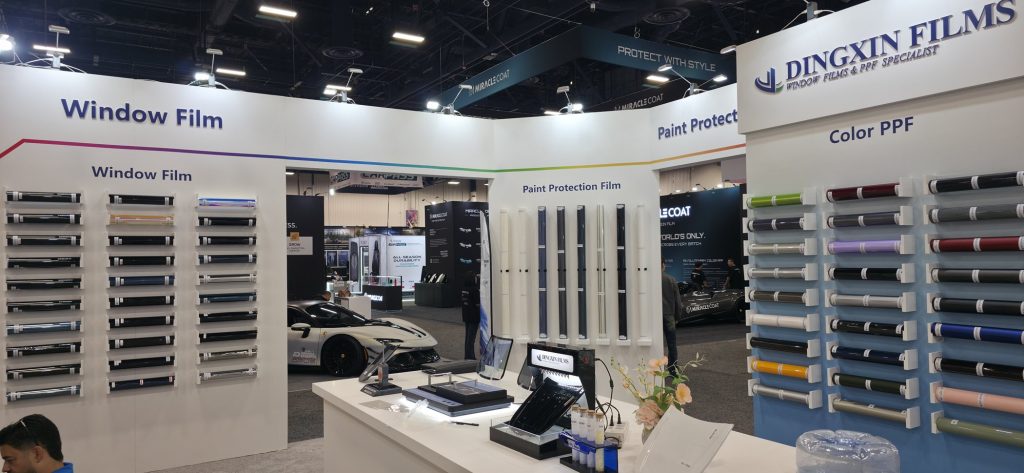
The color samples were what made me stop at Dingxin Films. Rows of film ran across the display racks, from pale shades to bright yellow, red and blue, with a black Mercedes-Benz beneath a large circular company sign nearby.
I photographed the North Hall display on November 5 during SEMA 2026 at the Las Vegas Convention Center. The show runs November 3–6. Dingxin’s corporate SEMA announcement identifies its location as booth #12451.
More Than One Kind of Protective Film
The labels around the booth make the range easy to follow: Window Film, Paint Protection Film, Color PPF and Windshield Film. This is a broader story than a display of conventional automotive window tint.
Dingxin’s official product range includes clear and colored paint protection films alongside automotive window films. The latter are listed in dyed, carbon, nano ceramic and sputtering categories. Those are manufacturer product classifications, not evidence that every variation was physically on display.
Color PPF Takes Center Stage
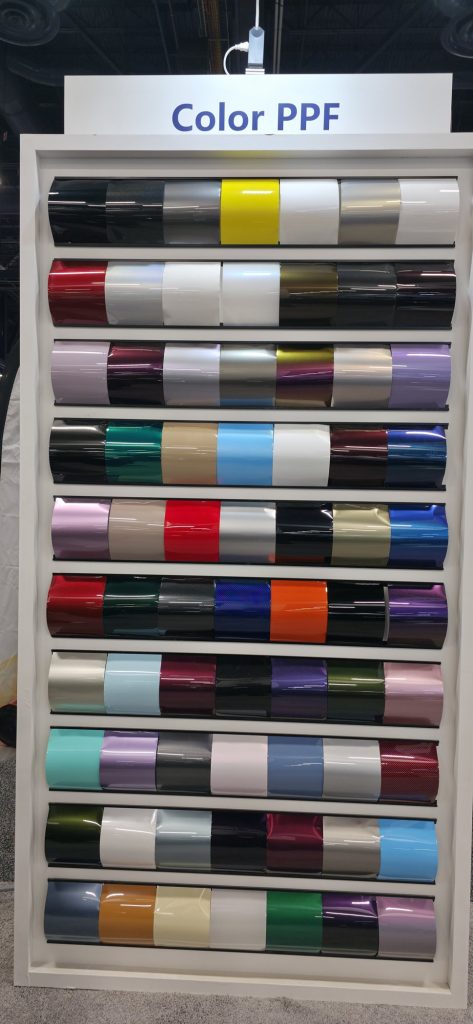
The large rack labeled Color PPF puts the appearance side of the category directly in front of visitors. Looking along the rows, it is the differences between the samples that hold the attention: dark colors beside pastels, bright shades beside more restrained finishes.
According to Dingxin’s colored TPU PPF information, the films use TPU-based construction and are intended to combine a color-changing finish with paint protection. The listed options include gloss, matte, satin and metallic finishes.
Conventional vinyl wrap is primarily associated with changing appearance; Color PPF is presented around that visual change and an intended protective role together. That distinction does not establish that one film is better for every job. I did not install or independently test these materials.
The Display Goes Beyond Color
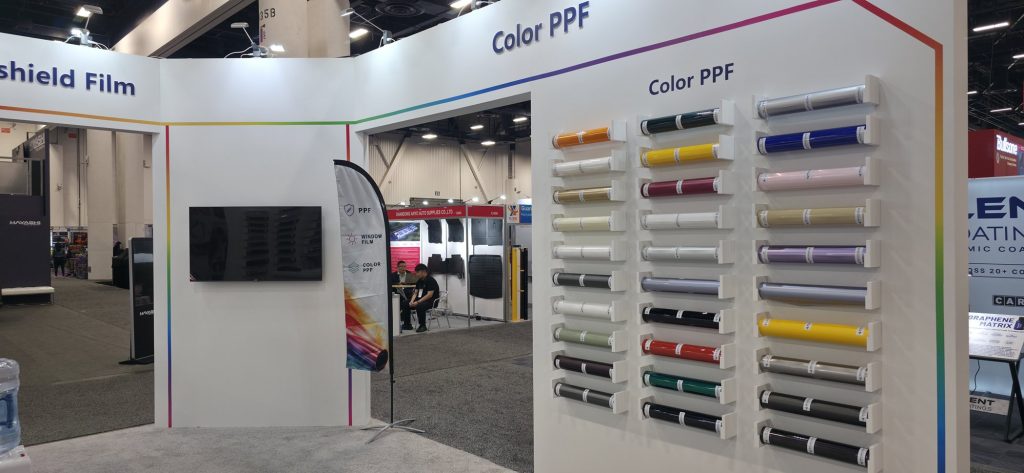
A second view of the booth shows another Color PPF rack beside the Windshield Film area. In the wider display, separate window-film and paint-protection-film racks reinforce that the products are meant for different surfaces and purposes.
Window films can be intended for solar control and privacy, while paint protection films address painted surfaces and windshield films are a separate glass application. A display label cannot tell us the measured performance of a specific film, so this is a look at the categories rather than a comparison of heat rejection or protection results.
From Vehicles to Buildings
The company’s catalog reaches beyond cars. Its official site also lists commercial and residential window films, including solar-control and safety applications.
That wider catalog helps put the North Hall display in context. Here, my photographs document the automotive-film sections; the building applications belong to the company’s broader product background.
A Display Built Around the Materials
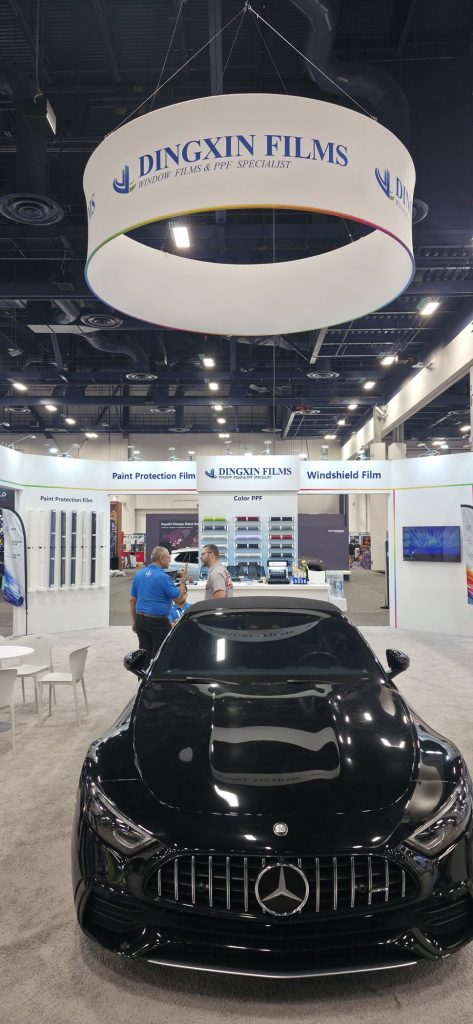
The Mercedes-Benz gives the booth an immediate visual anchor. Above it, the circular Dingxin Films sign makes the company easy to recognize; behind it, the sample racks bring the focus back to the films themselves.
What I liked about the arrangement was that the car did not replace the material display. There was still plenty to photograph in the rows of samples and the clearly separated product sections. The car catches the eye from the aisle, but the samples give visitors more to look at once they stop.
At SEMA, it is easy to focus on what has been built underneath a body. This stop turned my attention to the surface instead: the colors, the reflections and the materials being presented for different applications.
Best Vegas Events is continuing its SEMA 2026 coverage from the Las Vegas Convention Center. For current exhibitor navigation, the official SEMA floor plan is the place to check before heading across the halls.